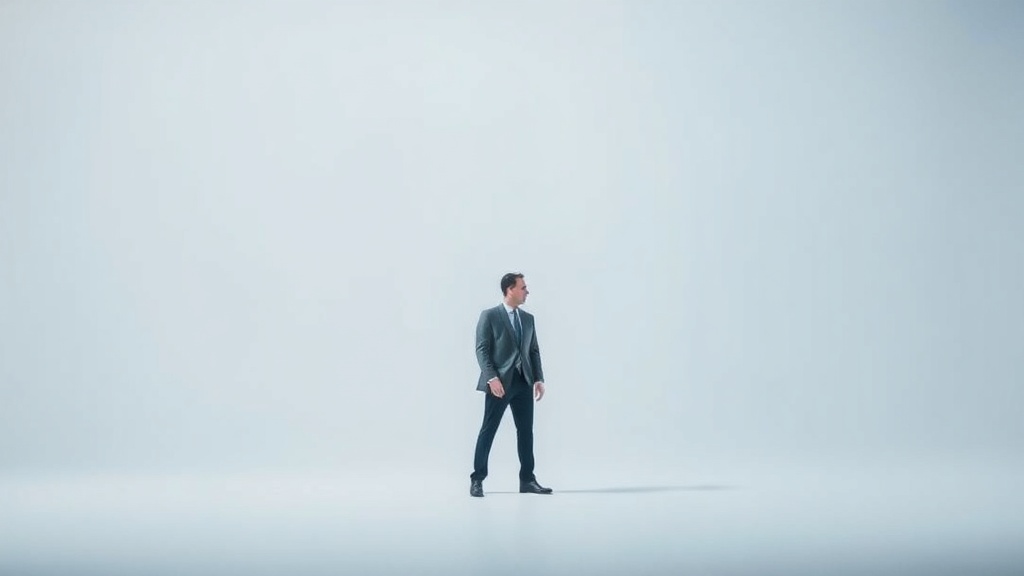
Using Negative Space to Simplify Your Composition

Quick Tip
Use empty space to give your subject room to breathe and direct the viewer's eye.
In this post, you'll learn how to use negative space to remove distractions and create a clear focal point in your images. Negative space isn't just "empty" space; it's a deliberate tool that directs the viewer's eye exactly where you want it to go.
What is Negative Space in Photography?
Negative space is the area surrounding your main subject that provides breathing room and context. While your subject is the "positive space," the negative space is the background or foreground that remains unoccupied by complex details. It acts as a buffer, preventing your image from feeling cluttered or overwhelming.
Think of it like a conversation. If everyone is shouting at once, you can't hear anything—but if there's a pause, the silence becomes meaningful. That's exactly how a well-placed void works in a photograph.
I often see beginners try to fill every inch of the frame with detail. It's a common mistake. Instead, try leaning on a simple background, like a clear blue sky or a plain concrete wall, to let your subject shine.
How Do You Use Negative Space Effectively?
You use negative space by intentionally choosing a minimalist background that complements your subject's shape and color. It requires a shift in mindset from "what can I add?" to "what can I remove?"
Here are three ways to implement this technique:
- Simplify the Background: Look for textures that don't compete with your subject, like a smooth sand dune or a matte surface.
- Use Leading Lines: Use the empty space to point toward your subject—this creates a visual path for the eye.
- Mind the Scale: A tiny subject in a massive, empty frame can evoke feelings of isolation or awe.
If you're interested in how movement affects these compositions, check out my guide on capturing movement through intentional camera movement. It's a different way of looking at space and time.
Does Negative Space Work for All Genres?
Yes, negative space is highly effective across portraiture, product photography, and even landscape photography. It's not just for minimalist art.
In portraiture, a plain backdrop prevents the viewer from getting distracted by a messy room. In product photography, it makes the item look premium and high-end. For example, if you're shooting a Leica M11, a clean, dark surface makes the craftsmanship the star of the show.
| Subject Type | Negative Space Approach | Intended Effect |
|---|---|---|
| Portraits | Solid color or bokeh | Focus on expression |
| Products | Clean, matte surfaces | High-end, premium feel |
| Nature | Large areas of sky/water | Sense of scale and calm |
The catch? If you use too much empty space without a strong subject, the photo just looks unfinished. You need a reason for that emptiness to exist. It's a delicate balance, but once you get it, your compositions will feel much more professional.